
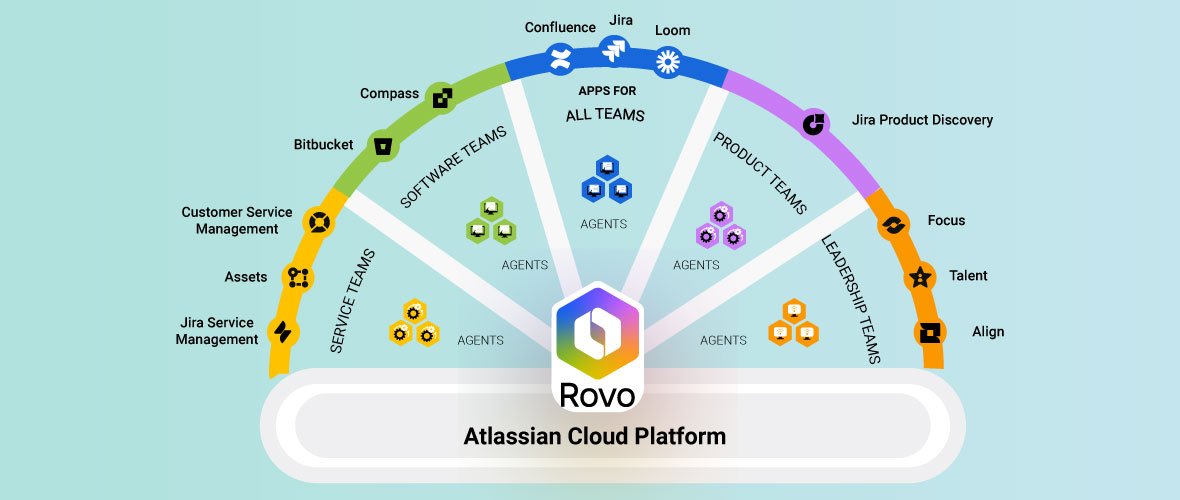
As organisations worldwide continue to prioritise digital collaboration, automation, and secure enterprise work systems, Atlassian’s 2025 product innovations and strategic moves have underscored its commitment to enhancing team productivity, AI-driven insights, seamless connectivity, and modern work platforms. In this review, we highlight the most important developments from Atlassian in 2025 and what to expect as they evolve through 2026—with a focus on Collections, AI, security, Cloud roadmap changes, unified work environments, and deeper DevOps alignment.
Launch and impact of Atlassian solution collections
In 2025, Atlassian expanded its product portfolio with Atlassian Collections—curated bundles of tools and AI capabilities designed around specific business outcomes rather than standalone apps. These Collections sit on top of the Atlassian System of Work, aiming to simplify tool sprawl and improve team productivity through packaged solutions that work together out of the box.
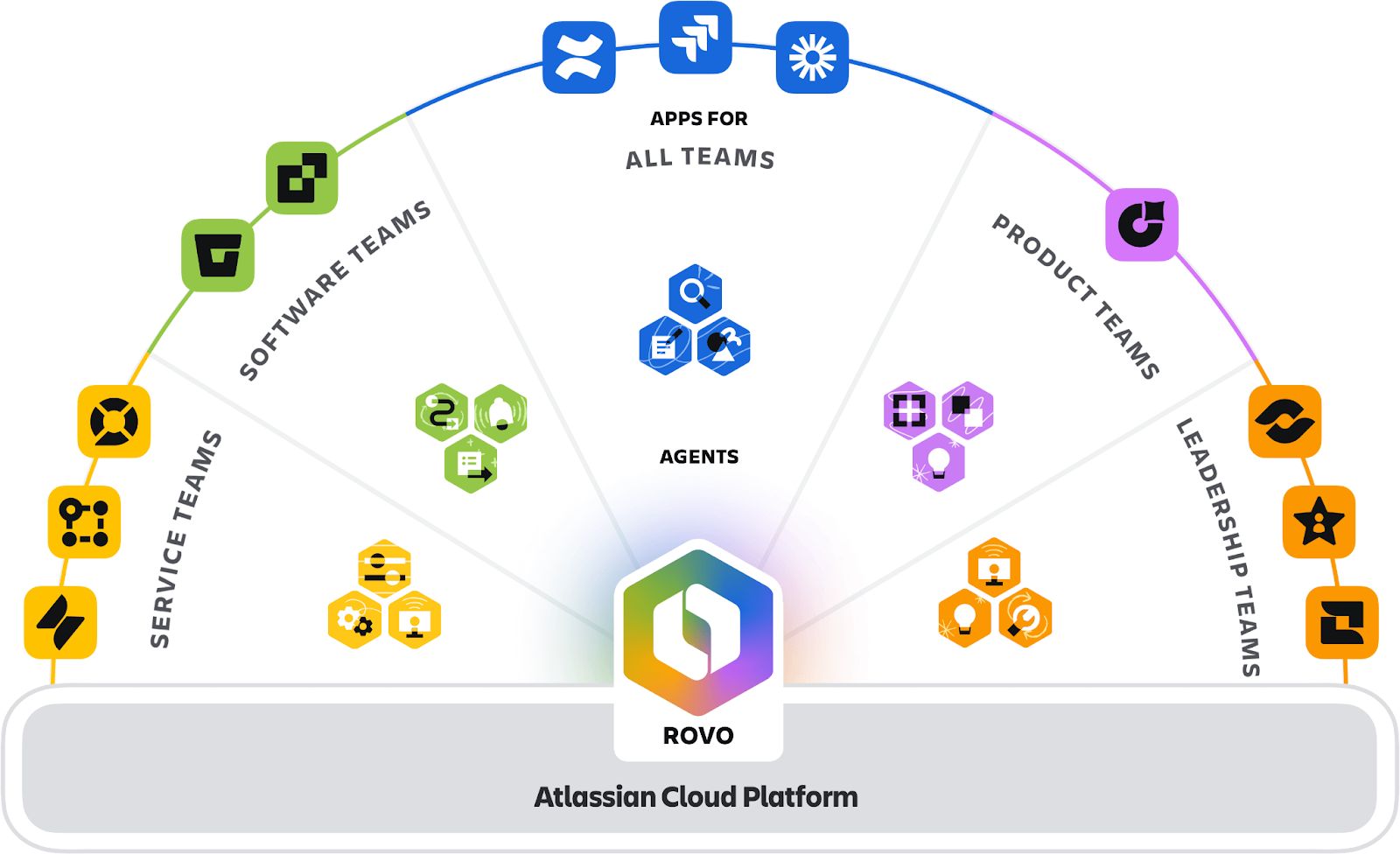
Major collections introduced:
- Teamwork Collection: Combines Jira, Confluence, Loom, and Rovo AI to improve everyday collaboration and reduce context switching for cross-functional teams.
- Software Collection: Designed for software organisations, it brings together Rovo Dev, Bitbucket, Pipelines, Compass, and DX (pending acquisition) to support developer productivity and engineering insights across the software delivery lifecycle.
- Service Collection: Announced at Team ’25 Europe, this bundle unites Jira Service Management, the new Customer Service Management app, Assets, and Rovo AI agents to provide a unified, AI-enabled service and support platform.
- Strategy Collection: Connects organisational priorities to work, goals, people, and investments, enhanced with built-in AI for strategic decision-making.
Why this matters:
Collections represent a shift from purchasing individual products to adopting outcome-oriented work platforms. For enterprises, this reduces integration complexity, accelerates onboarding, and supports cross-team collaboration with shared context and data continuity.
1. AI enhancements across Jira, Confluence & the Rovo ecosystem
AI continued to be a central theme for Atlassian in 2025, with multiple capabilities aimed at both everyday users and enterprise teams.
Atlassian Intelligence in product features
Across Jira and Confluence, Atlassian rolled out practical AI capabilities that help teams automate routine work and uncover insights right where they work:
- AI-powered linking of similar work items: Jira now suggests and automatically links related work items to give teams better context and reduce manual linking effort.
- Inline AI work item creation: Users can generate work items directly from Confluence pages, leveraging content and context to inform backlog planning.
- AI generated descriptions & backward integrations: Generate structured work item descriptions based on Confluence content and Teams/Slack chats—saving time and improving quality of backlog data.
- AI-assisted search and summaries: Atlassian Intelligence enhances search relevance and can summarise content changes or knowledge gaps in Confluence.
Rovo & external AI integrations
The Rovo platform expanded its AI ecosystem in 2025:
- A ChatGPT MCP connector now allows users to query Jira and Confluence data through ChatGPT, summarise tasks, create issues, and automate workflows with natural language.
- Atlassian acquired data cataloging startup Secoda to bring enhanced data discovery and semantic search to Rovo’s AI layer—helping teams access structured organisational data across sources.
These moves signal Atlassian’s intention to deliver context-aware AI that better understands organisational knowledge and workflows, not just isolated datasets.
Cloud roadmap changes & enterprise-grade security evolution
Atlassian’s push toward the Cloud continued in 2025, with notable ecosystem changes:
Cloud-first direction & legacy transitions
- Continued deprecation of legacy server products in favour of Cloud and Data Center (with clear end-of-life timelines through 2029) underscores the Cloud-first strategy.
Security enhancements
While Atlassian’s detailed Security Roadmap evolves through regular Cloud updates, specific capabilities include:
- Fine-grained link controls in Confluence: Administrators can now prevent public links for sensitive content.
- Advanced AI support chat on Atlassian support portals to address issues securely and in real time.
Security remains a core differentiator for enterprise customers, with Atlassian Guard and expanded authentication policies increasingly integrated.
2. Other platform enhancements that matter
In addition to Collections and AI, Atlassian introduced a range of user experience and productivity improvements in 2025:
- Unified language for Jira work items: The term “work” is increasingly replacing legacy “issue” phrasing to better reflect modern team roles and activities.
- Improved drag-and-drop and work item hierarchy views in Jira to make planning and task organisation more intuitive.
- Automation extensions between products: E.g., Confluence triggers automation when Jira issues are created, helping synchronise documentation and development workflows.
- Whiteboard and collaborative enhancements in Confluence with improved shapes, voting, and design flexibility.
Predictions for 2026: Unified work OS & deeper DevOps alignment
Looking toward 2026, several trends are emerging in Atlassian’s strategy and platform evolution:
1. A unified work operating system
Atlassian’s focus on Collections, Rovo AI, and contextual data suggests a future where teams operate on a platform that integrates work, knowledge, goals, and AI assistance. This aligns with industry demand for:
- Seamless transitions from planning (Confluence) to work execution (Jira) to delivery (Bitbucket/Pipelines)
- AI-assisted decision support embedded across tools
- A consistent work graph that surfaces context automatically
This sets the stage for what many call a Unified Work Operating System—a single, connected digital workplace where context flows with the user.
2. Deeper DevOps & lifecycle integration
Atlassian’s continued acquisition of developer intelligence platforms (e.g., DX) and AI-driven coding assistants positions the ecosystem for:
- Better insights into engineering productivity and bottlenecks.
- More proactive automation in builds, tests, and releases.
- Stronger bridge between planning and deployment—supporting full DevOps value streams.
Expect Atlassian to embed developer-centric AI (Rovo Dev) more deeply across Bitbucket, Pipelines, Jira, and IDE integrations—making AI-augmented DevOps a competitive capability.
Conclusion
In 2025, Atlassian doubled down on strategy-aligned work platforms, AI-centric capabilities, and packaged collections that meet distinct organisational needs—whether in software delivery, customer service, or strategic planning.
Key trends that defined this year include:
- Curated Collections for role-focused outcomes and simplified tool stacks.
- AI innovations that surface context, automate routine work, and improve insights across tools.
- Continued emphasis on Cloud-first evolution and enterprise security controls.
- A clear trajectory toward a Unified Work OS and enhanced DevOps lifecycle integration.
As we move into 2026, organisations that leverage Atlassian’s evolving ecosystem—especially in AI and integrated work platforms—will be better positioned to accelerate delivery, improve cross-functional alignment, and compete with greater resilience in an increasingly connected enterprise environment. Connect with our Atlassian experts to see how your organization can leverage AI-centric capabilities.