



In today’s digital landscape, a Cloud-first approach is no longer optional—it’s essential for agility and scalability.
In an era where U.S. enterprises are under increasing pressure to deliver innovation, accelerate time-to-value and strengthen governance across global operations, choosing the right platform matters. Atlassian is positioning itself not just as a collaboration vendor, but as a strategic work-platform for the modern enterprise. That positioning is anchored on three converging forces: AI models embedded in workflows, end-to-end DevOps and delivery pipelines, and multi-cloud/adoption flexibility at scale. This blog drills into how Atlassian’s practical AI strategy—led by Rovo agents and the Teamwork Graph—fits into DevOps and multi-cloud transformations, especially for large U.S. companies.
Why AI, DevOps, and Multi-Cloud Integration Matter Now for U.S. Enterprises?
Three simultaneous mandates define today’s enterprise IT environment:
- Speed and agility: Engineering, product and business teams must deliver quickly while maintaining quality.
- Governance and risk control: U.S. regulators, global supply chains, and internal compliance functions demand auditable, secure workflows and data residency control.
- Cloud & multi-environment complexity: Many enterprises now run hybrid/multi-cloud architectures; choosing a vendor that can support that complexity matters.
Atlassian enters this context with growing credibility. It recently expanded its cloud-platform focus, entered strategic partnerships (such as with Google Cloud) to enable multi-cloud hosting, and invested in AI-automation that is built into its core applications rather than bolted on.These moves signal to U.S. enterprise buyers that Atlassian aims to be an AWS/Google/Azure-friendly, enterprise-grade SaaS partner—not just a tool for small teams.
Atlassian’s Platform-Centric AI Strategy for Modern Enterprise Workflows
Atlassian’s approach to AI is not an experiment in isolation — it’s an engineering bet on embedding intelligent behaviour directly into the day-to-day tools teams already use. The strategic centrepiece of this shift is Rovo (Rovo Search, Rovo Chat and specialized Rovo Agents) powered by the Teamwork Graph, a unified data layer that learns context across Jira, Confluence, JSM and hundreds of third-party apps. Together these pieces move AI from a “feature” to an operational capability: intelligent agents that act as persistent, governed teammates inside workflows rather than ephemeral chat widgets.
Understanding Rovo Agents: How Atlassian’s AI Assistants Transform Team Productivity
Rovo Agents are specialized, configurable “AI teammates” that can read and synthesize cross-product data, take actions (or prepare recommended actions), and drive routine or complex processes end-to-end. Atlassian ships out-of-the-box agents (e.g., issue organizers, theme analysers, incident triage helpers) and a Studio for building custom agents tailored to organizational workflows. In practice, that means:
- Automated triage and routing of tickets in Jira Service Management, with suggestions grounded in historical incidents and runbooks.
- Agents that work on project backlogs: break down large work into smaller tasks, link to code repositories, assign to devs or teams, and track dependencies.
- Deep knowledge search across disparate sources (SaaS apps, repositories, documents) so enterprise knowledge is surfaced rather than buried. A third-party connector announcement for the Teamwork Graph notes integration with Salesforce, ServiceNow, Asana, Wrike and other apps to sharpen cross-domain intelligence.
Practical Enterprise Benefits: From Workflow Automation to Data-Driven Decision-Making
Early adopters and Atlassian’s own guidance report several measurable gains when agents are applied to high-value workflows:
- Faster decision cycles: agents summarize cross-team context and present next steps, reducing back-and-forth and the need for ad-hoc meetings.
- Lower operational toil: routine tasks (onboarding provisioning checks, basic triage, repetitive reports) are automated or semi-automated, freeing SMEs for higher-value work.
- Improved knowledge reuse: agents surface and act on institutional knowledge in Confluence and work items, increasing discoverability and reducing duplicated effort.
DevOps and Software Delivery – Atlassian’s role in the USA’s evolving engineering landscape
For U.S. enterprise organisations facing complex pipelines, multiple teams, global deployments and regulatory constraints, Atlassian provides a coherent platform approach:
- Integrated tooling: With Jira for planning/tracking, Bitbucket for Git-hosting and CI/CD, and Jira Service Management + Opsgenie for incidents/ops, Atlassian covers the end-to-end life cycle.
- AI/agent integration: Rovo agents can automate parts of the delivery process—such as generating release notes, mapping feature tickets to code branches, identifying bottlenecks, and surfacing risk ahead of time via data from Teamwork Graph. The Spring 2025 Jira release emphasised these agent-powered capabilities.
- Pipeline visibility + governance: For large U.S. enterprises, a platform that supports traceability, audit logs, analytics and unified work across dev, QA, operations is critical. Atlassian’s push to transition Data Center clients to Cloud emphasises these capabilities.
Multi-Cloud and Data Residency: The Enterprise Imperative for Compliance and Scalability
For U.S. enterprises operating across regions, geographies and regulatory regimes, cloud choices and data residency matter. Atlassian has made strategic moves to align with this reality:
- In August 2025 Atlassian announced a major partnership with Google Cloud, signalling that their core cloud apps (Jira, Confluence, Loom) will be hosted on Google Cloud in addition to AWS—delivering true multi-cloud options.
- Previously Atlassian and AWS announced a multi-year collaboration to accelerate migration and provide enterprise-grade AI, analytics and security for customers shifting from Data Center to Cloud.
- With these infrastructure partnerships, Atlassian offers U.S. enterprises choice of cloud, scale, resilience and global footprint—important when dealing with global development teams, regulated environments or multi-region operations.
- For enterprise migration strategy: Atlassian is phasing out new baseline for its Data Center offering as more customers move to Cloud and benefit from AI, analytics and unified workflows.
For enterprise buyers, this means Atlassian is now aligned with the architectural needs of global IT: multi-cloud orchestration, enterprise scale, data-residency choices, and access to modern AI and analytics built into the platform.
A Practical Roadmap for U.S. Enterprises Adopting Atlassian’s AI and Cloud Solutions
Drawing it all together, here’s a practical roadmap for large U.S. organisations seeking to adopt Atlassian’s AI, DevOps and multi-cloud capabilities—with enreap positioned as your trusted partner.
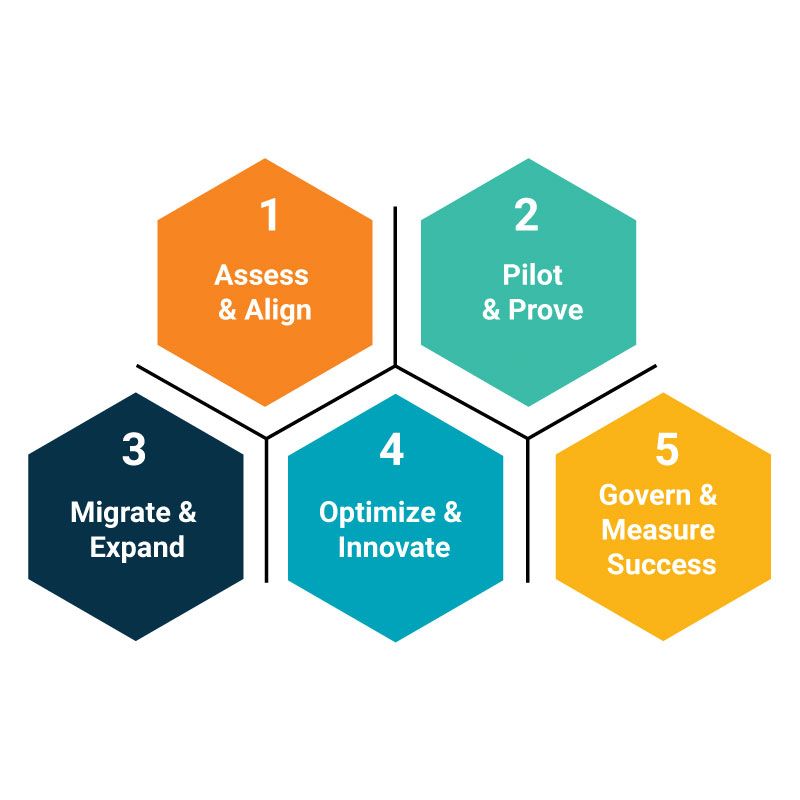
Why enreap Is the Strategic Atlassian Partner for AI-Driven Enterprise Transformation in the U.S.
At this stage, you may be evaluating Atlassian Cloud and asking how to convert potential into measurable results. That’s where enreap steps in:
- We specialise in enterprise-level Atlassian Cloud migrations, delivering not just technical lift-and-shift but architecture, governance and ROI frameworks tailored for large U.S. organisations.
- Our expertise spans AI and workflow automation, meaning we help you identify the right Rovo agent use-cases, instrument them for outcome measurement and embed them into your DevOps/delivery workflows.
- With knowledge of multi-cloud architectures and enterprise operations, we guide you through hosting, data-residency decisions, compliance, user-adoption and scale.
- We bring a measured outcome-oriented approach—defining success metrics for every phase, assisting with bespoke agent building through Rovo Studio, and embedding continuous improvement practices.
Whether you are just beginning your cloud-migration journey, exploring AI-powered workflow automation, or scaling your global delivery organization—enreap can help you turn Atlassian’s strategic capabilities into real business value.
Conclusion
The future of enterprise platform strategy isn’t about isolated tools—it’s about intelligent, integrated platforms that bring AI, DevOps, and multi-cloud flexibility together. Atlassian’s Rovo agents, Teamwork Graph, and evolved app portfolio position it as a platform of choice for U.S. enterprises ready to move from ambition to execution. For companies that want to accelerate speed, strengthen governance, and modernize delivery at scale, the opportunity is real. Partnering with an Atlassian expert like enreap ensures you move beyond proof-of-concept into measurable, enterprise-grade transformation.
Ready to explore how Atlassian’s agent-driven platform can work for you? Let’s start with a readiness assessment and roadmap built for your U.S. enterprise needs.