




As US enterprises scale, disconnected tools, siloed teams, and fragmented workflows often slow down execution. Technology teams may work efficiently within their own tools, but leadership still struggles to connect strategy with delivery, while service teams operate separately from engineering.
To address this challenge, many organizations are adopting the Atlassian System of Work — a framework designed to connect business strategy, technology delivery, and service operations through shared platforms, workflows, and data.
At Atlassian, the System of Work concept emphasizes aligning teams around common goals while enabling visibility across the entire software and service lifecycle. For large enterprises, however, implementing this framework requires more than simply deploying tools. It requires structured architecture, governance, and continuous optimization.
At enreap, we help enterprises operationalize the Atlassian System of Work through a structured services approach—ensuring strategy, delivery, and operations work as a unified system.
What is the Atlassian System of Work?
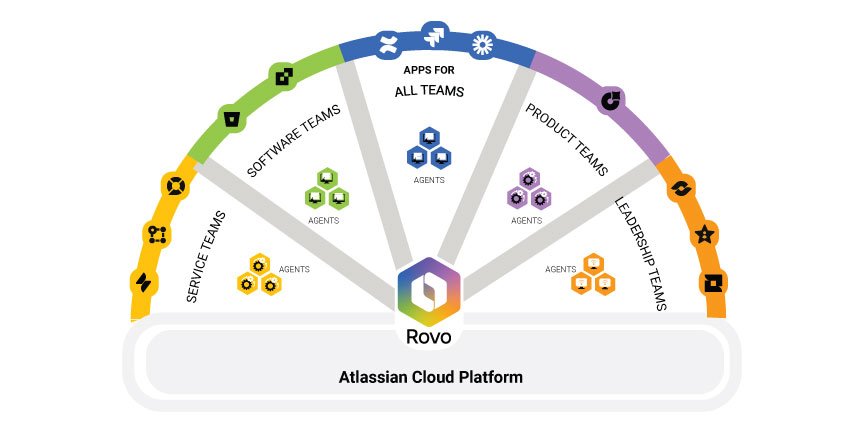
The Atlassian System of Work is a model that connects three critical enterprise domains:
1. Business strategy
What the organization is trying to achieve — including strategic priorities, product roadmaps, and transformation initiatives.
2. Technology delivery
How software products and digital platforms are built, tested, and deployed by engineering teams.
3. IT and service operations
How services are supported, maintained, and scaled across the organization.
Using Atlassian’s enterprise collaboration platform, organizations can unify these domains into a shared operational environment where work is visible, measurable, and continuously improving.
Platforms such as:
enable teams to plan, build, deliver, and support work across departments.
According to Atlassian, a System of Work helps organizations break down silos between technical and business teams and improve collaboration across the enterprise.
The challenge for US enterprises
Many enterprises across the United States already use Atlassian tools. However, widespread tool adoption does not automatically translate into a cohesive System of Work.
Common challenges include:
- Inconsistent Jira workflows across teams
Different teams configure projects independently, leading to inconsistent issue types, statuses, and reporting structures.
- ITSM disconnected from engineering delivery
Service teams using ITSM tools may not have visibility into development pipelines or release schedules.
- Limited visibility for leadership
Executives struggle to gain real-time insights into delivery progress, operational performance, and service health.
- Manual processes and low automation maturity
Ticket routing, approvals, and service requests often remain manual, slowing response times.
- Fragmented DevOps toolchains
Engineering teams may use multiple systems that are poorly integrated with work management platforms.
Without a structured services approach, enterprises often end up with multiple Atlassian instances functioning independently rather than as an integrated operating model.
enreap’s Atlassian services approach
At enreap, we focus on designing enterprise systems, not just tool implementations. Our methodology ensures Atlassian platforms function as a unified operating environment for planning, building, delivering, and supporting work.
1. Discovery and System Design
Every engagement begins with a structured discovery process that evaluates:
- Business objectives and operating models
- Existing Atlassian deployments and governance models
- Workflow inconsistencies across teams
- DevOps and ITSM integration requirements
The outcome is a System of Work blueprint tailored for enterprise-scale operations.
This architecture defines:
- standardized workflows
- governance structures
- integration models
- reporting frameworks
2. Enterprise Implementation and Configuration
Based on the blueprint, enreap implements and configures Atlassian platforms to align with enterprise processes.
Core platforms include:
- Engineering and product development – Jira Software for agile planning, backlog management, and delivery tracking.
- Enterprise service management – Jira Service Management for ITSM, incident management, and service delivery.
- Knowledge and collaboration- Confluence for documentation, knowledge management, and collaboration.
- Secure source code collaboration -Bitbucket for repository management and code collaboration.
Workflows are standardized to ensure scalability, governance, and enterprise-wide visibility.
- Cloud Migration and Modernization
Many enterprises are transitioning to Atlassian Cloud to improve scalability, security, and platform innovation.
enreap supports:
- Server and Data Center to Cloud migrations
- Security and compliance configuration
- Identity and access management
- performance optimization
- cost governance and license optimization
Atlassian Cloud provides continuous innovation and enterprise-grade security features that support modern collaboration models.
4. ITSM and Enterprise Service Management
Enterprise service management extends ITSM capabilities beyond IT departments.
Using Jira Service Management, enreap helps organizations implement service portals for departments such as:
- HR
- Finance
- Legal
- Facilities
- Procurement
Capabilities include:
- automated request handling
- approval workflows
- SLA tracking
- service performance reporting
This creates a consistent service experience across the enterprise.
5. Integration, Automation, and DevOps Enablement
A true System of Work requires seamless connectivity across engineering, operations, and service management tools.
enreap enables:
- CI/CD integrations with development pipelines
- automated workflows across Jira and service management processes
- integration with enterprise DevOps toolchains
- real-time visibility into software delivery and service operations
These integrations help reduce manual work while improving delivery speed and operational transparency.
6. Managed Services and Continuous Optimization
After implementation, enterprises require ongoing administration and optimization to ensure the platform continues to evolve with business needs.
enreap provides:
- Atlassian platform administration and support
- governance and compliance management
- continuous improvement initiatives
- SLA-driven managed services
This ensures enterprises maintain a stable and scalable Atlassian environment while enabling long-term adoption.
Business outcomes enabled by enreap
By implementing an Atlassian System of Work, US enterprises can achieve measurable operational improvements.
Key outcomes include:
- Faster time-to-market – Integrated delivery pipelines accelerate product releases.
- Stronger alignment between IT and business – Shared visibility improves strategic decision-making.
- Improved service reliability and transparency – ITSM and operational metrics provide clear performance insights.
- Reduced tool sprawl – Consolidated platforms simplify enterprise technology stacks.
- Higher operational efficiency – Automation reduces manual processes and accelerates service delivery.
Why enreap for Atlassian Services
enreap’s approach combines platform expertise with enterprise transformation experience.
Organizations choose enreap because of:
- deep expertise across the Atlassian ecosystem
- experience implementing enterprise-scale Atlassian platforms
- a services-led approach focused on building systems of work
- strong integration capabilities across DevOps and ITSM environments
Rather than simply deploying tools, we help enterprises build sustainable operating models that connect strategy, delivery, and service management.
Conclusion
For US enterprises navigating complex digital ecosystems, an Atlassian System of Work is becoming a foundational capability.
However, achieving its full value requires more than adopting tools—it requires aligning processes, teams, and technology around a shared operating framework.
With structured Atlassian services, enterprise architecture expertise, and continuous optimization, enreap enables organizations to transform fragmented toolsets into a unified System of Work that drives collaboration, visibility, and operational efficiency.
Explore enreap’s Atlassian Services for more details