



In 2025, developer productivity entered a new era shaped by the practical integration of artificial intelligence across the software development lifecycle. Development teams are no longer asking whether AI can help them write code faster or improve quality. Instead, they are asking how to govern, scale, and standardise its use across the organisation while maintaining security and compliance.
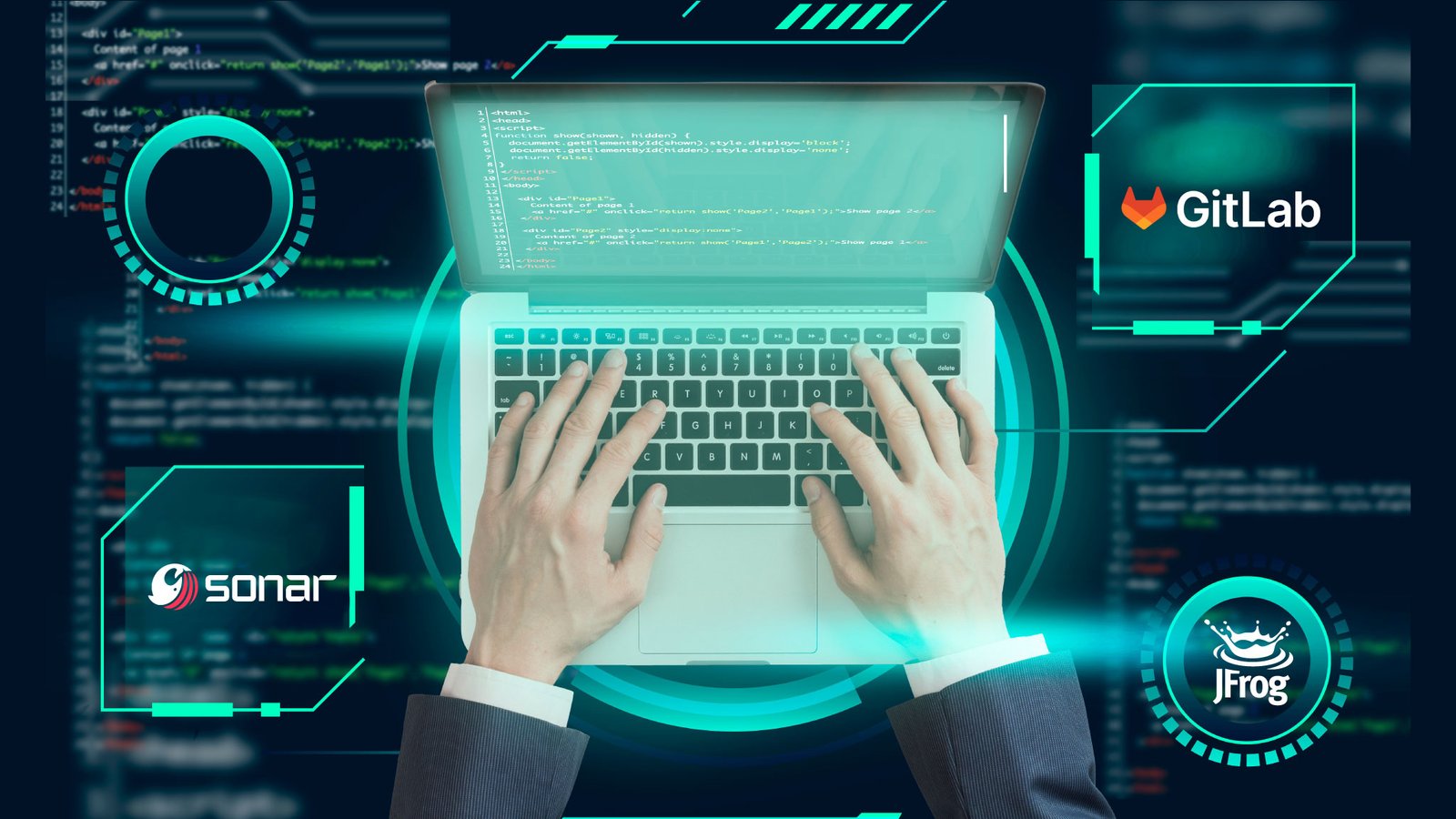
In this blog we look at how GitLab, JFrog, and SonarSource evolved in 2025 to address these challenges and what technology leaders should expect in 2026. We also highlight where strategic partnerships, like those between enreap and these vendors, can accelerate adoption and drive measurable developer productivity.
The state of developer productivity in 2025
Software teams entered 2025 with a strong focus on AI augmented coding, automation of quality checks, and integrated toolchains. Organisations accelerated software delivery by embedding AI in their development workflows, but also faced the reality that productivity gains at the coding level could create bottlenecks downstream in testing, security, and release readiness. As industry observers noted, challenges such as fragmented toolchains and persistent governance gaps can still erode the expected productivity benefits of AI if not managed holistically.
The key takeaway from 2025 is that developer productivity requires more than just code generation. It requires integrated tooling, automated governance and security, and end-to-end visibility across the software lifecycle.
How GitLab enhanced developer productivity in 2025
In 2025 GitLab continued to expand its role as an integrated DevSecOps platform while embedding AI natively into core developer workflows. With GitLab 18, the platform introduced AI capabilities that support real-time code suggestions, code generation, refactoring assistance, and AI chat help directly within the integrated development environment (IDE). These capabilities help developers write code faster and more securely, reducing friction and shortening feedback loops.
GitLab also addressed organisational productivity challenges through deeper DevSecOps integration, optimised CI/CD pipelines and features that help developers work within a single, unified platform rather than a fragmented toolchain. GitLab’s own research highlighted that as coding accelerates with AI, organisations must adopt intelligent orchestration and governance to avoid new bottlenecks in collaboration and compliance.
What this means for teams in 2026
In 2026, teams should expect GitLab’s AI features to continue maturing toward predictive insights and automated pipeline optimisation. The focus will shift from tactical AI assistance in code writing to strategic acceleration of entire delivery workflows, making it easier for organisations to scale AI across teams confidently.
JFrog’s role in securing and governing the development lifecycle
JFrog’s momentum in 2025 was marked by innovations that align developer productivity with secure, automated delivery. Through its AI catalog, shadow AI detection, and integrations with platforms such as GitHub, JFrog enabled development and DevOps teams to create AI-driven workflows that are both efficient and governed. These capabilities help teams manage and secure AI models, dependencies, and release artefacts in a way that supports rapid delivery without compromising compliance.
By winning recognitions like GitHub’s Tech Partner of the Year, JFrog demonstrated how AI powered insights and governance can be combined with artifact and supply chain management to improve developer efficiency and reduce risk across the delivery pipeline.
What this means for teams in 2026
For 2026, teams should expect these platforms to deliver tighter integration between AI-driven coding and secure release governance, with a focus on eliminating bottlenecks and ensuring compliance as AI-generated contributions become more prevalent.
Sonarsource advancing code quality and automated verification
SonarSource continued its 2025 evolution toward an integrated code governance platform that helps teams maintain quality and security as code is written and shipped. Through the Sonar integration program and enhanced AI-powered analysis capabilities, SonarSource enabled organisations to embed automated quality and vulnerability checks throughout their CI/CD pipelines.
In addition, investments in automated code quality measurement and AI-driven remediation tools helped teams manage the increased volume of AI-assisted code without adding undue manual burden. SonarQube’s enhancements reflect a broader industry requirement: productivity gains from AI must be balanced with strong verification and standards enforcement to prevent technical debt and security risks.
What this means for teams in 2026
Looking to 2026, SonarSource will be central in helping organisations scale quality assurance across tools and languages, automatically detecting issues earlier and empowering developers to fix them without obstructing delivery velocity.
Strategies to scale AI-driven productivity in 2026
To truly scale AI-driven productivity in the year ahead, development organisations need to focus on:
- Integrated toolchains
productivity gains from one area can be lost if teams must manually bridge gaps between code, test, security and deployment. Platforms like GitLab, JFrog, and SonarSource that offer native integration and shared context help reduce tool friction and improve overall flow. - Automated governance and quality enforcement
as AI begins to handle repetitive tasks, organisations must ensure that quality and security are maintained automatically as part of the pipeline. Tools that embed quality gates, automated scanning, and compliance checks protect against technical debt. - Data-driven measurement of impact
measurements of productivity should look beyond lines of code or commits. Metrics like cycle time, defect escape rate, and time to remediation provide a clearer picture of where AI actually adds value.
How enreap can help
At enreap, we work with organisations to bring these technologies together in a way that delivers measurable impact. As a partner with deep expertise in GitLab, JFrog and SonarSource, we help teams define a coherent, secure and scalable developer productivity strategy that aligns with business objectives.
Our approach includes:
- Assessment of current developer workflows and productivity bottlenecks
- Roadmap and implementation of integrated DevSecOps pipelines using GitLab’s AI capabilities
- Embedding automated code quality and security checks with SonarSource across CI/CD
- Optimising binary and artefact governance with JFrog as part of a secure software supply chain
Whether your focus is improving cycle times, enhancing quality, or scaling AI adoption responsibly across engineering teams, Enreap provides the consulting, integration, and training support to help you realise the full productivity potential of these platforms.
Conclusion
Developer productivity in 2025 was defined by the practical application of AI within toolchains and workflows. GitLab’s AI features improved coding velocity, JFrog strengthened secure governance of software supply chains and SonarSource provided automated quality enforcement. In 2026, success will not be about individual tools, but about how organisations integrate, govern, and measure AI-driven work across the entire development lifecycle.
To get there, teams must adopt a holistic approach that includes integrated platforms, automated governance and continuous measurement of outcomes. Working with experienced partners like enreap helps make this achievable at scale.